

 ENG
 中文简体
 Português
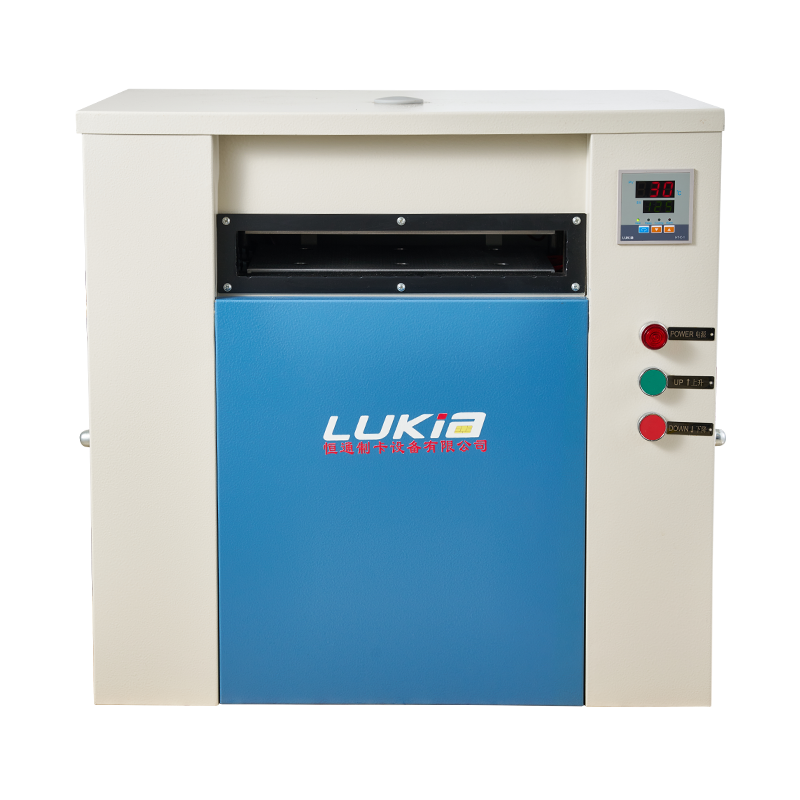
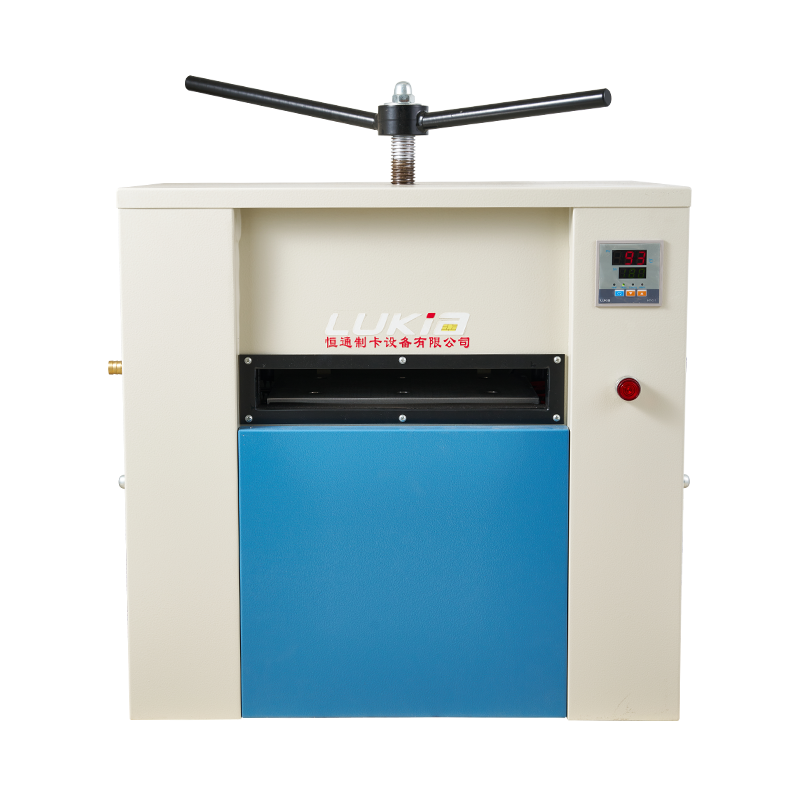
A Tabletop Electric Punching Machine gives small card producers a way to punch printed card strips at the same bench where laminating and other finishing work take place. Instead of trimming each card by hand or sending the job to an outside cutter, an operator loads a strip, presses a pedal and lets the machine complete the stroke. This method suits shops handling changing order sizes, where a large automatic line may be difficult to justify.
One Press, One Card
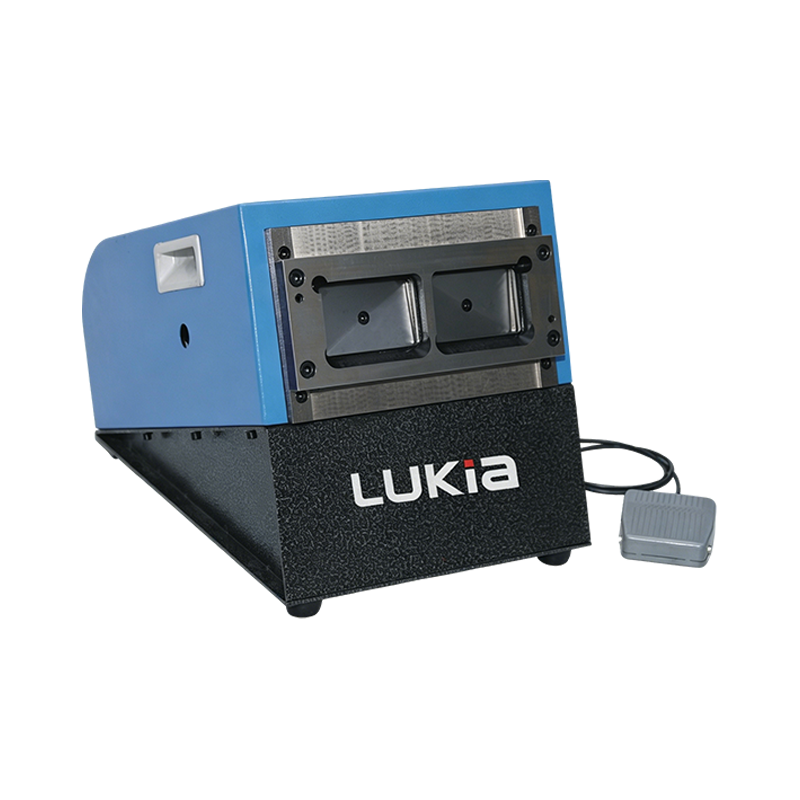
The operator places a card strip into the die by hand and presses the foot pedal. The motor drives the punching stroke, producing one card and its holes before the next piece is positioned. The pedal leaves both hands available for handling the material, while the motor supplies the punching force.
Manual loading is a deliberate part of this arrangement. There is no sheet-feeding system to set up or alignment sensor to configure before production begins. The operator controls how each strip enters the die, making the process straightforward for short runs and changing jobs. Hengtong's card punching machine range includes the HT-308-2, HT-308-3 and HT-308-4 models for PVC cards. A Tabletop Electric Punching Machine of this type emphasizes a simple operating sequence rather than unattended feeding.
Matching The Die To The Card Format
Card dimensions and material thickness affect which machine and die a shop needs. The HT-308-3 is specified for PVC between 0.4 and 0.8 mm thick, with a standard 85.6 x 53.9 mm die. The HT-308-4 handles PVC up to 1 mm thick and offers formats including 100 x 70, 110 x 80, 130 x 90 and 100 x 140 mm. These options cover jobs beyond the dimensions of a conventional ID card.
Both models can be fitted with other die sizes by order. This suits shops producing a recurring custom format, since cards can be punched to the required outline instead of trimmed afterward. The rated output differs: 2,000 cards per hour for the HT-308-3 and 1,000 for the HT-308-4. Actual production depends on manual loading and job setup, so these figures should not be treated as guaranteed shift output. Selecting a Tabletop Electric Punching Machine is therefore a matter of matching the die and material range to the work the shop receives.
Fitting The Machine Into A Small Workshop
A tabletop machine needs a stable workbench and enough room to feed strips and collect finished cards. The HT-308-3 weighs 38 kg net, while the HT-308-4 weighs 45 kg. Both are specified for 110 V or 220 V, 50/60 Hz power, with an 800 W rating. These details help a shop assess its workspace and available supply before installation.
The scale differs from that of a high-speed production line. Hengtong's HT-306-4-A3 automatic model processes 3 x 8 layouts from A3 sheets at a stated rate of 10,000 to 12,000 cards per hour. It weighs about 1,200 kg and uses a 380 V supply. A Tabletop Electric Punching Machine occupies much less workshop space and does not require the floor area or electrical arrangement of that larger system. The two formats serve different production settings rather than acting as direct substitutes.
When A Larger Punching Line Is Needed
As order volumes grow, manual strip loading can become the limiting step. A servo-fed PLC punching line can process full sheets and use position marks to guide the punching sequence. This approach suits sustained, high-volume work, where feeding and positioning many cards in one cycle can reduce repeated manual handling.
Smaller batches create different demands. Rush orders, short runs and unusual card formats may not keep a large line fully occupied, while preparing a full-sheet setup can take time. Some plants therefore use an automatic line for bulk orders and retain a Tabletop Electric Punching Machine for smaller jobs or formats that need a separate setup. The choice depends on order frequency, batch size and how often card dimensions change.
A Defined Role In Card Production
Card production does not always move from small batches to continuous high-volume runs. A print shop may handle school cards one week, membership cards the next and hotel cards after that. The finishing process still needs clean, consistent outlines, but quantities and formats vary between jobs.
For these workshops, the HT-308 series offers pedal operation, manual strip loading and interchangeable die options. A Tabletop Electric Punching Machine can sit alongside a laminator without requiring a dedicated production floor. For shops with varied small orders, a Tabletop Electric Punching Machine also provides a separate punching option without tying up a larger production line. Hengtong's range includes high-speed equipment for larger runs, allowing the two machine formats to serve different production needs.