

 ENG
 中文简体
 Português
A plain sheet of PVC is smooth, non-absorbent, and a poor match for water-based inkjet ink, which tends to bead on the surface instead of settling into it. That is the reason a White Inkjet Printing Substrate carries a coating. The coating, not the PVC beneath it, is what the printer actually writes on, and it affects color, edge sharpness, and how the printed layer behaves when the card is later laminated.
What the Coating Does
The supplier describes its substrate as a white PVC sheet with a polymer coated surface, printed directly with a color inkjet printer and used for laminated PVC cards. A polymer coating gives the ink something to hold onto, so droplets stay where they land instead of spreading. Colors then reproduce more accurately, and fine text is easier to keep legible. Buyers assessing a White Inkjet Printing Substrate are therefore judging the coating as much as the sheet.
Why White Matters as a Base
Inkjet inks are largely transparent, so the color a viewer sees depends on the surface underneath. A white base reflects light back through the ink and keeps colors clear, while an off-white or yellowish sheet shifts every shade slightly. For card producers who print photos, logos, or brand colors, a consistent white from one batch to the next is a practical requirement. A White Inkjet Printing Substrate that varies in tone between deliveries can make a repeat order look different from the approved sample.
Handling Before Printing
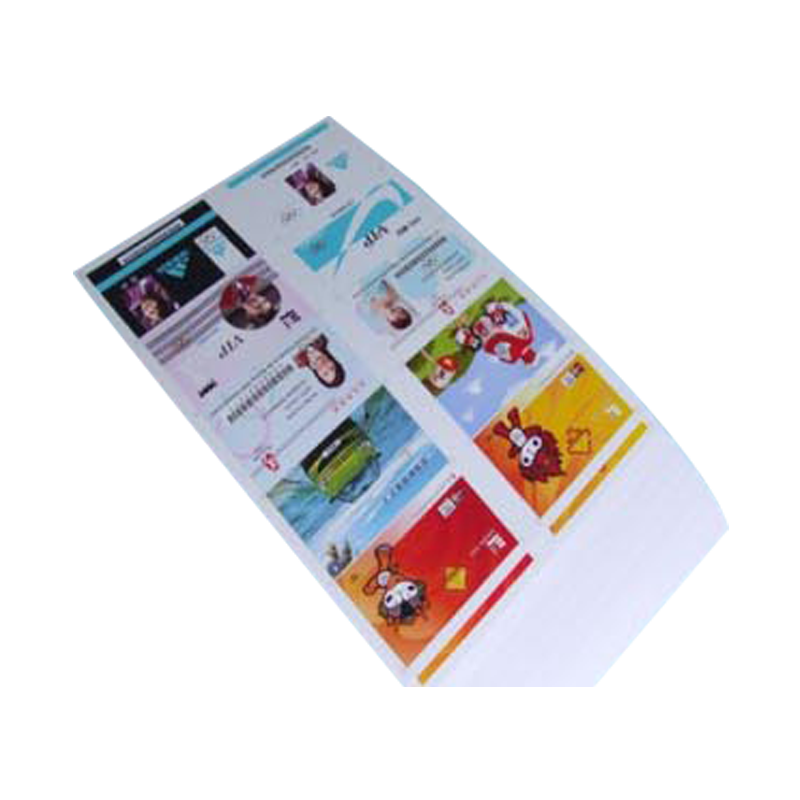
A coated surface can pick up fingerprints, dust, and scratches, and any of these can appear as a mark in the printed image. Sheets are commonly kept in their packaging until the moment of printing, stored flat, and handled by the edges. Humidity can also change how a coating accepts ink, so a stable storage area helps. Operators new to a White Inkjet Printing Substrate often run a short test print after any change in storage conditions or ink supplier.
From Printed Sheet to Laminated Card
After printing, the process described on the supplier's page adds a PVC adhesive film over the printed face, and the assembly goes into a laminator. At this stage the coating has a second job: it must stay bonded to the PVC while heat and pressure are applied, and it must work with the adhesive film instead of resisting it. Ink that has not dried fully before lamination can smear or leave bubbles, so drying time is part of the routine. A buyer sourcing a White Inkjet Printing Substrate usually tests the whole sequence of printing, film, and lamination together, since a sheet that prints well but bonds poorly would still produce rejects.
Printer and Ink Compatibility
The page does not list thickness, sheet sizes, or compatible printer models, so these are points a buyer confirms directly. Different inkjet printers use dye or pigment inks, and a coating tuned for one may behave differently with another. Sheet size must also suit the printer's tray and the laminator's width. Putting these details in writing before an order saves time later, particularly for a White Inkjet Printing Substrate that will be used across more than one printer model.
Flatness and Batch Consistency
Sheets that curl or vary in thickness can feed unevenly through a printer, and uneven stacks can bond unevenly in a laminator. Flatness, coating coverage, and thickness tolerance are all worth inspecting on a sample sheet, preferably from more than one carton. Producers running steady volumes tend to keep a retained sheet from each approved delivery as a reference for the next.
What Buyers Typically Compare
For card manufacturers and distributors sourcing this category, useful comparison points include the coating's ink compatibility, whiteness and its consistency between batches, thickness and sheet size, how well the sheet bonds with the PVC adhesive film, and packaging that protects the surface in transit. Hengtong Card Making Equipment Co., Ltd., based in Yongjia County, Wenzhou, Zhejiang, lists the White Inkjet Printing Substrate beside PVC adhesive film, a laminated steel sheet, laminators, and punching machines, so the substrate can be matched with the other materials and machines used in the same process. Buyers can run sample sheets through their own printer and laminator, then compare how each White Inkjet Printing Substrate handles color, drying, and bonding before placing a larger order.